
Does AI checkout increase theft?#
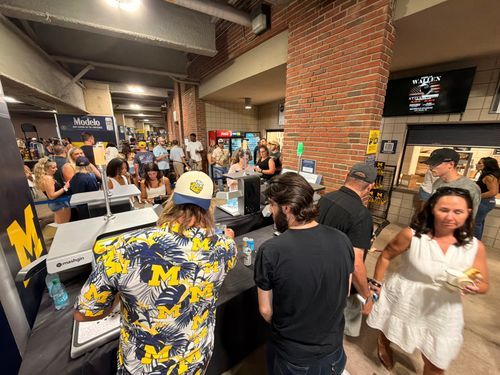
No. In Mashgin's audit of 1,167 transactions at major sports stadiums, total loss from all causes was 1.3%, below the 1.62% industry average reported by the National Retail Federation (NRF) in 2020. Mashgin's team watched every audited transaction from start to finish using the multi-angle video Mashgin captures automatically. Mashgin's audits of convenience stores, airport stores, and university dining found loss rates below the industry average as well.
How does theft happen at AI checkout, and what prevents it?#
Where misuse happened, it took one of two forms: deliberately stacking items to hide them from the cameras, or leaving merchandise off the tray. Mashgin is developing automated detection for both, which will trigger real-time alerts to staff.
Three factors keep theft low:
- Shorter lines. Long waits push some shoppers to leave without paying, and faster checkout removes that pressure.
- Staff visibility. One attendant can keep an eye on several kiosks at once.
- Visible recording. Shoppers can see that transactions are recorded, which deters theft.
How much theft happens at self-checkout?#
Retail loss from all causes, including theft, error, and fraud, averaged 1.62% of sales in the National Retail Federation's 2020 survey. Traditional self-checkout is widely seen as a weak point, and analysts have linked some retailers' decisions to scale back self-checkout to theft.
AI checkout with staff nearby performs better. In Mashgin's audit of 1,167 stadium transactions, total loss from all causes was 1.3%, below the 1.62% average, and Mashgin's audits of convenience stores, airport stores, and university dining also found loss rates below the industry average.